Is your office still designed for the way your team worked five years ago? Across Singapore, businesses are rethinking their workplaces as office attendance stabilises and rents remain firm. Choosing which office interior design trends in Singapore deserve your budget isn’t just about looks; it’s a strategic move that affects productivity, talent retention and how clients see your brand.
The challenge is that not every trend delivers a return. Some upgrades pay for themselves through lower energy bills and better use of space, while others date quickly and add little value.
In this guide, you’ll find eight trends worth investing in for 2026, what each one does for your business, the signs you need it, and a quick comparison table to help you prioritise your fit-out budget.
1. Hybrid-Ready Space Planning That Matches Real Attendance
Hybrid-ready space planning is the most valuable trend for most Singapore offices because it makes every square metre earn its keep. CBRE’s 2026 Asia Pacific Office Occupier Survey found that 88% of companies now have employees in the office at least three days a week, the highest level recorded since the pandemic. Your floor plate needs to support focused work, collaboration and meetings on busy days without sitting empty on quiet ones.
Space is also costly. Core CBD Grade A rents reached $12.50 per square foot per month in Q2 2026 while vacancy fell to a record low of 3.3%, according to CBRE’s commentary on URA statistics.
Look out for meeting rooms that are always booked while rows of desks sit empty, or teams huddling in corridors for quick discussions. Start with a utilisation review and professional office space planning so each zone reflects how your people actually work, and use our office space calculator for a quick baseline before you brief a designer.
2. Acoustic Comfort and Dedicated Focus Zones
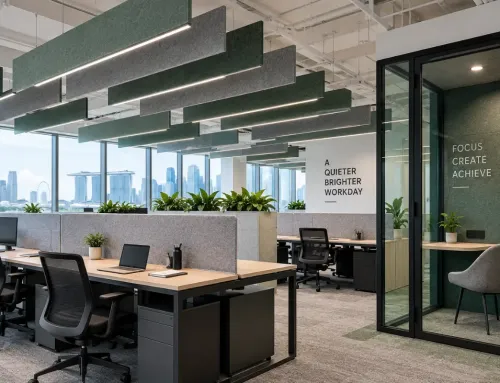
Acoustic design is worth investing in because noise remains one of the biggest productivity drains in open-plan offices. JLL’s research on workplace quality in Asia Pacific found that employees are broadly satisfied with seating and natural light, yet acoustic quality is one of the areas where offices still fall short.
These aren’t just comfort problems. Constant chatter disrupts deep work, makes confidential calls awkward and lowers the quality of the video meetings your hybrid teams rely on.
Practical fixes include acoustic wall and ceiling panels, carpet tiles in busy zones, phone booths and enclosed focus rooms. Our guide to office acoustic design in Singapore explains how to plan these elements from the start rather than as an afterthought.
3. Biophilic and Wellness Design Built for the Tropical Climate
Biophilic design pays off when it is planned around Singapore’s climate and your maintenance capacity. Wellbeing is a real business concern, with JLL’s Workforce Preference Barometer finding that 49% of Singapore employees surveyed reported burnout from work pressures.
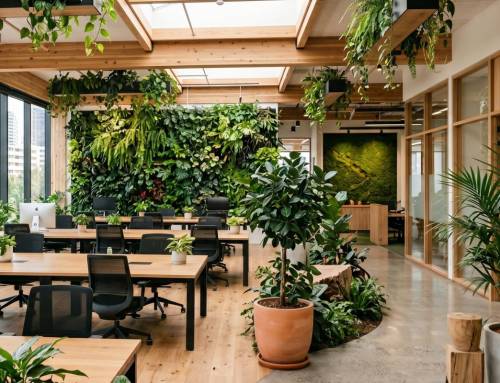
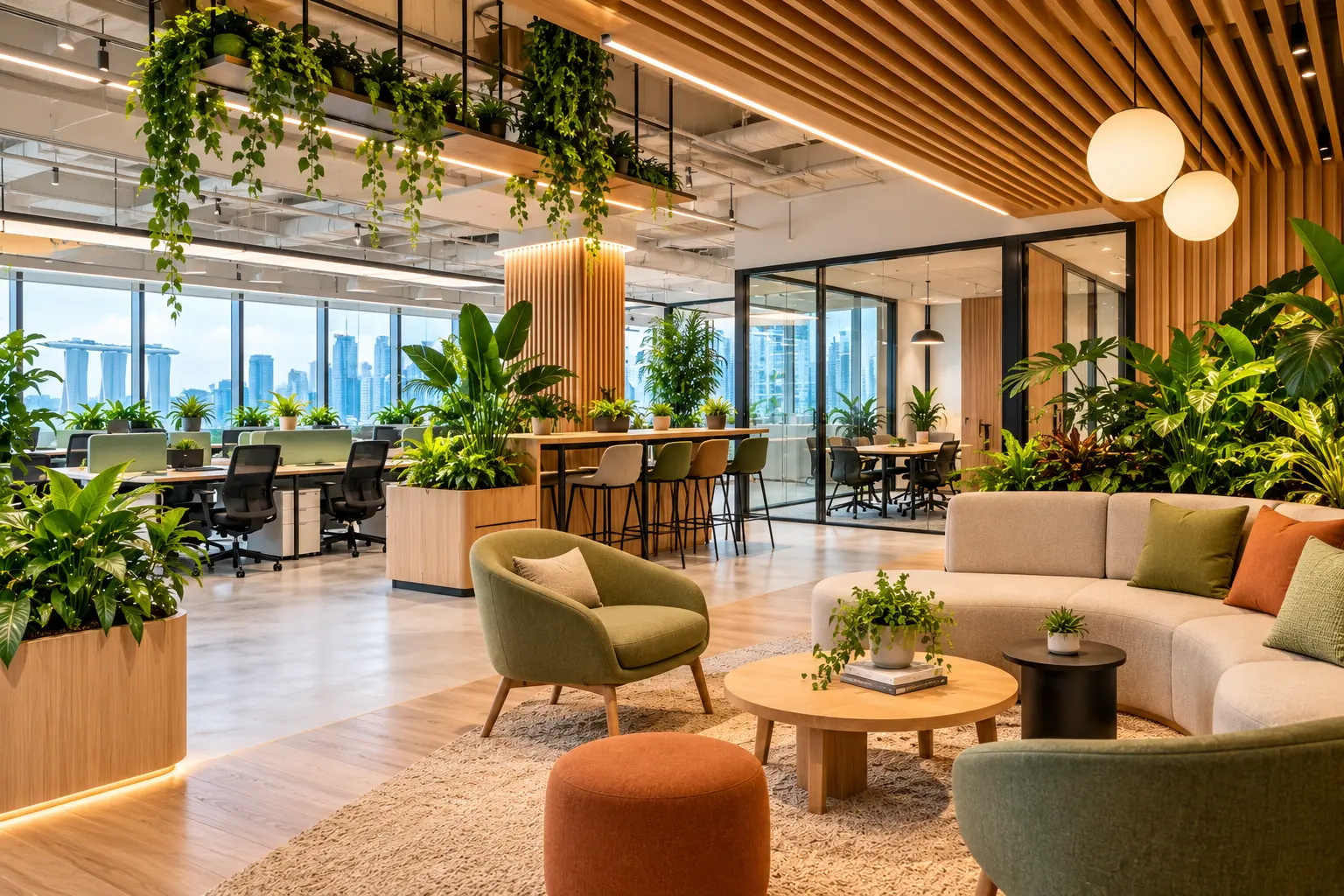
Natural light, greenery, timber textures and calm recharge spaces help your team reset during the day. They also make your office a place people want to come to, rather than a place they are told to come to.
Choose shade-tolerant, low-maintenance plants that thrive in air-conditioned interiors, and avoid living walls without a proper irrigation and maintenance plan. For climate-specific ideas, see our article on biophilic office design ideas for the Singapore climate.
4. Sustainable, Energy-Efficient Fit-Outs
Sustainable fit-outs are one of the safest long-term investments because they lower operating costs while supporting national targets. Under the Singapore Green Building Masterplan, the government aims to green 80% of buildings by gross floor area by 2030.
For your office, that means LED lighting with occupancy sensors, zoned air-conditioning controls, low-VOC paints and adhesives, and durable materials with recycled content. These choices cut utility bills, improve indoor air quality and give you a stronger story for ESG reporting and client tenders.
Explore the latest sustainable office interior design trends in Singapore, and learn how green office design saves money in the long run.
5. Modular Partitions and Flexible Furniture
Modular partitions and furniture are worth it because your team size and work patterns will keep changing. Fixed walls lock you into today’s layout, while demountable glass partitions and mobile furniture let you reconfigure in days instead of renovating again.
This flexibility protects your investment over the full lease term. It can also simplify reinstatement at the end of your tenancy, which is a real cost consideration for many Singapore businesses.
If you are planning new meeting rooms or team enclosures, our office partitioning specialists can recommend systems that balance privacy, acoustics and adaptability.
6. Hospitality-Inspired Social Hubs and Pantries
A well-designed social hub is worth investing in when it does more than serve coffee. JLL’s Asia Pacific research found that four in ten respondents expect enhanced spaces and amenities in exchange for spending more days in the office.
Treat your pantry as a multi-purpose space for town halls, client events, informal meetings and team lunches. Movable seating, good lighting, power points and a screen turn it into one of the hardest-working areas on your floor.
7. Smart, AI-Ready Office Infrastructure
Smart office infrastructure is worth prioritising because cabling, power and connectivity are difficult and costly to retrofit later. CBRE’s 2026 survey found that 46% of occupiers now describe themselves as AI adopters or active implementers in their real estate functions, up from 9% in 2024.
Focus your budget on reliable Wi-Fi coverage, video conferencing in every meeting room, room booking systems and occupancy sensors that show how space is really used. Flashy gadgets can wait, but the backbone needs to be right from day one.
8. Brand-Led Design That Tells Your Story
Brand-led design is worth investing in where clients and candidates see it most. A well-designed office communicates care, confidence, and professionalism before anyone says a word.
With expert office interior design support, focus your branding on your reception, client meeting rooms and key feature walls, using your brand colours, materials and story with restraint. Keep back-of-house areas timeless so they do not date quickly, and browse our project gallery to see how Singapore brands have brought their identity to life.
Which Office Interior Design Trends in Singapore Should You Prioritise?
The best order of investment depends on your lease length, headcount plans and budget. Use this comparison as a starting point.
| Trend | Investment Value | Main Business Benefit | Watch Out For |
|---|---|---|---|
| Hybrid-ready space planning | Very high | Better use of costly floor space | Planning without real utilisation data |
| Acoustic comfort and focus zones | High | Productivity and better hybrid meetings | Adding panels after the fit-out |
| Biophilic and wellness design | High | Wellbeing, morale and retention | Plants unsuited to indoor conditions |
| Sustainable fit-outs | High | Lower running costs and ESG credibility | Greenwashing without measurable impact |
| Modular partitions and furniture | High | Flexibility across the lease term | Low-quality systems with poor acoustics |
| Social hubs and pantries | Medium to high | Collaboration and culture | Single-use spaces that sit idle |
| Smart, AI-ready infrastructure | Medium to high | Data-led decisions and seamless meetings | Gadgets before the basics |
| Brand-led design | Medium | Client and talent perception | Overdesigning back-of-house areas |
Some popular ideas deserve more caution before you commit budget to them.
- Heavily themed décor that looks dated within two or three years
- Full hot-desking without a booking system or enough lockers
- Trend-led colours on surfaces that are expensive to replace
- Living walls installed without a maintenance contract
To see what your shortlist could cost, try our renovation budget calculator. If you are still comparing partners, our guide on how to choose an office interior design company can help you ask the right questions.
Investing in the Right Office Interior Design Trends in Singapore
The office interior design trends in Singapore that deliver real value share one thing in common. They solve business problems, from wasted floor space and noisy open plans to rising energy bills and the need to give people a reason to come in.
Hybrid-ready layouts, acoustic comfort, climate-smart biophilia, sustainable fit-outs, modular systems, social hubs, smart infrastructure and purposeful branding are investments rather than expenses. Each one supports productivity, retention and the impression your business makes. The key is choosing the right mix for your team, lease and budget.
Ready to invest in an office that works as hard as your team? Greeen’s office interior design specialists help Singapore businesses turn the right trends into practical, lasting workspaces. Get a free quote today.
Frequently Asked Questions
What are the top office interior design trends in Singapore for 2026?
The top office interior design trends in Singapore for 2026 are hybrid-ready layouts, acoustic focus zones, biophilic wellness design, sustainable fit-outs, modular partitions, social hubs, smart infrastructure and brand-led design. They reflect higher office attendance, firm CBD rents and growing expectations for workplace quality. The most valuable ones improve how space is used rather than simply how it looks.
How much does office interior design cost in Singapore?
The cost of office interior design in Singapore depends on your floor area, the condition of the space, the scope of works and your choice of finishes. Mechanical and electrical works, partitions and specialist items such as acoustic treatment can significantly affect the total. Use a budget calculator for an early estimate, then request a site-specific quote for accurate pricing.
Is sustainable office design worth the investment?
Yes, sustainable office design is usually worth the investment because it lowers operating costs over the life of your lease. Energy-efficient lighting, sensors and zoned air-conditioning reduce utility bills, while low-VOC materials improve indoor air quality. It also supports ESG reporting and aligns with the Singapore Green Building Masterplan, which aims to green 80% of buildings by gross floor area by 2030.
How long does an office interior design project take in Singapore?
An office interior design project in Singapore typically takes from several weeks to a few months, depending on size and complexity. Design development, building management approvals, any required regulatory submissions and furniture lead times all influence the schedule. Planning early and confirming approvals before construction helps you avoid costly delays to your move-in date.
Do I need approval to renovate my office in Singapore?
Yes, most office renovations in Singapore need at least building management approval before work starts. Works that affect fire safety, structural elements or major building services may also require submissions to the relevant authorities, such as SCDF or BCA. An experienced office interior design firm will manage these submissions so your project stays compliant.